
Latency Is Dead: Building Real Voice Agents That Actually Listen
The awkward silence is finally over. Mostly.
You know that pause? That soul-crushing three-second delay between when you finish a sentence and when the voice bot finally decides to answer? For years, that silence was the reason I told clients, “Don’t do voice. Just build a chat interface.”
It was embarrassing. We were chaining systems together like a Frankenstein monster. First, you had a transcriber (like Whisper) crunching the audio. Then, you threw that text at an LLM. Then, you took the text output and fed it to a TTS engine. By the time the audio got back to the user, they’d already hung up or started yelling “Hello?” into the void.
But looking back at how the stack has evolved over the last twelve months, the conversation has changed. Literally. We aren’t just simulating conversation anymore; we’re actually processing speech end-to-end. And frankly, it’s about time.
Stop Chaining APIs and Start Streaming
The biggest shift—and the one that finally made me willing to put my name on a voice project—is the move to native audio-to-audio processing.
The old “transcription sandwich” approach is dead. If you are still converting speech to text before your model processes it, you are doing it wrong. The latency penalty is just too high.
Native streaming via WebSockets is the standard now. The model hears the audio stream directly. It doesn’t just parse the words; it parses the sound. This sounds like a minor technicality, but it changes everything about the user experience.
I was testing a support agent prototype last week. I sighed loudly into the mic—didn’t say a word, just a frustrated exhale. The model picked up on it. It didn’t hallucinate a text transcription of “[sighs]”; it just shifted its tone to be more apologetic in the next response. That’s the difference. We aren’t losing the non-verbal signal in the transcription layer anymore.
The “Barge-In” Problem
Here is where things used to fall apart. Humans interrupt each other constantly. It’s rude, sure, but it’s natural.
Old bots were terrible at this. You’d try to cut them off, but they’d keep barreling through their pre-generated audio file like a runaway train. It felt like talking to a radio broadcast.
The current generation of end-to-end models handles “barge-in” (interruptibility) by keeping the audio input channel open while generating output. The second the user speaks, the VAD (Voice Activity Detection) kicks in, sends a truncate signal, and the bot shuts up. Instantly.
I spent two days tuning the VAD sensitivity on a project recently. Set it too high, and the bot stops talking every time a dog barks in the background. Set it too low, and the user has to scream to get a word in. But once you find that sweet spot? It feels like magic. It feels like a phone call.
It’s Not All Sunshine and Rainbows
I don’t want to sound like a marketing brochure here. While the tech is “production-ready,” the implementation reality is still messy.
1. The Cost Factor
Audio tokens are heavy. If you’re running a text bot, you’re paying pennies. If you’re streaming raw audio in and out of a high-end model for a 20-minute conversation? That bill scales up fast. I’ve had to have some uncomfortable conversations with CFOs about why the “customer service automation” project is burning through compute credits like a crypto miner.
2. The WebSocket Dance
Managing persistent WebSocket connections on mobile networks is still a nightmare. Users walk into elevators. They switch from Wi-Fi to 5G. The socket drops.
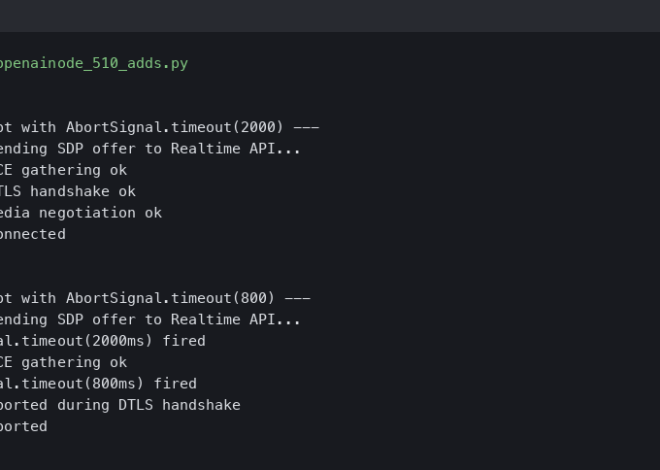
If your code doesn’t handle reconnection gracefully—and I mean seamlessly, preserving the conversation state—the user experience tanks. I learned this the hard way when a demo crashed mid-sentence because the office Wi-Fi hiccuped. Now, I spend more time writing error-handling logic for the connection layer than I do on the actual prompt engineering.
3. Hallucinations Sound Scarier
When a text bot hallucinates, it looks dumb. When a voice bot hallucinates, it sounds insane. There is something visceral about a human-sounding voice confidently stating incorrect facts or, worse, breaking character.
I had one instance where the model got confused by background noise and started responding to a TV show playing in the user’s room. It was funny in testing. It would have been a PR disaster in production.
What You Should Be Building Now
If you’ve been sitting on the sidelines waiting for voice AI to stop sucking, you can get in the game now. But keep the scope tight.
Don’t try to build “Her” (the movie). You aren’t there yet, and neither is the hardware most people use. Build specific, high-value agents where speed matters.
- Receptionists that actually work: Handling scheduling where the user can say, “No, wait, actually Tuesday is bad,” and the bot adjusts instantly.
- Complex triage: Situations where explaining a problem verbally is 10x faster than typing it out.
- Language practice: This is the killer app. Latency kills conversation practice. The new low-latency stack makes it viable.
The tools we have right now are powerful, but they’re sharp. You can cut yourself easily. Focus on the latency. If it’s not near-instant, it’s not worth building. The users have been burned by bad voice bots for a decade; they won’t forgive a slow one in 2026.
So, yeah. The tech is ready. The question is, are your error logs ready for the chaos of real-world audio?